Hagia Sophia's Traveling Scholars: From Ancient Manuscripts to 2026 Digital Archives: Hagia Sophia Through the Eyes of Scholars
Hagia Sophia has captivated scholars for centuries, inspiring countless works and serving as a wellspring of knowledge across every era. This ancient marvel continues to be a subject of intense study, with academics now leveraging 2026's advanced digital archives to analyze its rich history and cultural significance, tracing its journey from ancient scrolls to modern scholarly interpretations.
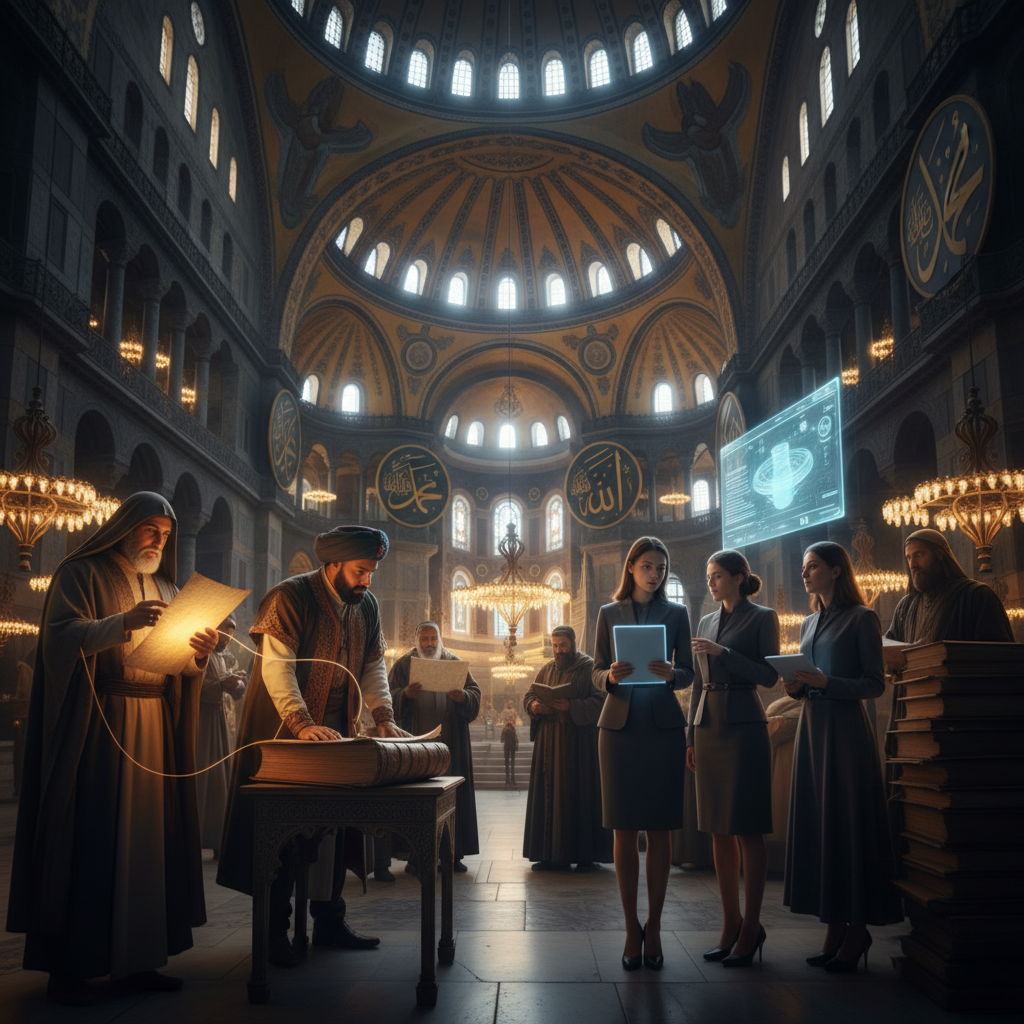
Hagia Sophia Scholars: Bridging Ancient Manuscripts to 2026's Digital Archives
For centuries, the iconic Hagia Sophia has captivated researchers, leading to countless works and serving as a continuous source of inspiration. This ancient structure transcends its roles as a place of worship or a museum; it stands as a testament to the knowledge and philosophical evolution of diverse civilizations. As we delve into 2026, we explore how Hagia Sophia scholars have illuminated this unique structure, leveraging both traditional sources and cutting-edge digital archives. Indeed, understanding Hagia Sophia allows us to truly depict this enduring bridge of knowledge, stretching from the distant past to the vibrant present.
The Historical Journey of Hagia Sophia Scholars
From its very inception, Hagia Sophia functioned not only as a religious hub but also as a significant center for learning and culture. During the Byzantine Empire, esteemed theologians, architects, and artists made invaluable contributions to its construction and embellishment. Following the Ottoman conquest, the structure embraced a new cultural and religious identity. Significantly, the Hagia Sophia scholars of that era diligently worked to integrate the edifice with Islamic sciences and arts.
Byzantine Era Academics and Hagia Sophia
- Procopius: A leading historian of the period, he provided crucial information regarding Hagia Sophia's construction, detailing it as an engineering marvel.
- Isidore and Anthemius: As the principal architects, they created this colossal structure, employing advanced engineering knowledge of their time.
- Photius: One of Byzantium's foremost religious scholars, he presided over various rituals within Hagia Sophia and meticulously worked on religious texts.
Ottoman Era Academics and Hagia Sophia
Following the Ottoman conquest, Hagia Sophia continued its function as a mosque, thereby becoming a focal point for numerous scholars and learned individuals. Sultan Mehmed II's inaugural prayer there after the conquest signaled its transformation into a new center of scholarly and cultural pursuit. These dedicated Hagia Sophia scholars ensured the continuity of its intellectual legacy.
- Akshamsaddin: The revered teacher and spiritual guide of Sultan Mehmed the Conqueror, he played a pivotal role in Hagia Sophia's transition to Islam.
- Evliya Çelebi: This famous traveler dedicated considerable sections of his "Seyahatname" (Book of Travels) to Hagia Sophia, elaborating on the structure and its state during his time. He regarded Hagia Sophia as a unique religious and architectural monument.
- Mimar Sinan: The architectural genius who resolved Hagia Sophia's structural issues, added its minarets, and fortified the building against seismic activity. His works were instrumental in ensuring Hagia Sophia’s longevity.
Hagia Sophia's Manuscripts and Archival Footprints
The extensive information we possess about Hagia Sophia today largely stems from ancient manuscripts and meticulous archival documents. These invaluable resources offer rich details, spanning from the building's construction process, through its numerous restorations, to its intricate architectural features, mosaics, and frescoes. Therefore, the Topkapi Palace Museum Archive, the Presidential State Archives of Türkiye (formerly Prime Ministry Ottoman Archives), and diverse Byzantine sources remain indispensable for the dedicated work of Hagia Sophia scholars.
Byzantine Era Sources for Hagia Sophia Scholars
Byzantine-era chronicles, comprehensive church records, and imperial edicts meticulously chronicle Hagia Sophia's initial construction, its profound religious significance, and subsequent repairs following major fires and earthquakes. Written predominantly in Greek, these sources formed the fundamental bedrock for Hagia Sophia scholars of that period.
Ottoman Era Records and Scholarly Research
Waqf deeds, detailed construction ledgers, repair records, and vivid travelogues meticulously kept during the Ottoman period reveal Hagia Sophia's evolving function as a mosque, the additions made, and the profound influence of Ottoman architecture on this grand structure. Evliya Çelebi's "Seyahatname," in particular, provides invaluable details concerning Hagia Sophia's condition in the 17th century, offering rich material for modern Hagia Sophia scholars.
Hagia Sophia Scholars in the Digital Realm of 2026
In our current digital age, the accessibility and comprehensiveness of information have dramatically improved for Hagia Sophia scholars. Ancient manuscripts are now systematically digitized, the most intricate details of the structure are meticulously examined using 3D modeling, and virtual reality offers immersive journeys through time. Furthermore, in 2026, research on Hagia Sophia is gaining unprecedented new dimensions through advanced, AI-powered analyses, greatly assisting Hagia Sophia scholars.
Digital Archives and Comprehensive Databases for Hagia Sophia Scholars
Leading libraries across Türkiye and globally have successfully transitioned manuscripts and archival documents to sophisticated digital platforms. Consequently, a researcher anywhere in the world can now instantly access thousands of pages of text written about Hagia Sophia. The digital archive of Topkapi Palace Museum, the Presidential State Archives, and various academic databases represent invaluable resources in this ongoing endeavor for Hagia Sophia scholars.
3D Modeling and Immersive Virtual Reality for Hagia Sophia Research
Sophisticated 3D models of Hagia Sophia enable a much deeper understanding of the structure's intricate architectural details, its static integrity, and its exquisite decorations. Through immersive virtual reality (VR) tours, both visitors and researchers can experience the building across different historical periods, exploring meticulously restored mosaics and even long-lost sections. These remarkable technological advancements significantly advance the work of Hagia Sophia scholars.
Hagia Sophia's Mystical Tales and Concealed Knowledge
Beyond its status as a historical and architectural marvel, Hagia Sophia has also been the setting for numerous mystical stories and captivating legends. These narratives profoundly deepen the spiritual ambiance of the structure and offer visitors a uniquely different experience. These intriguing tales, originating from both the Ottoman and Byzantine periods, further amplify the enduring mystery surrounding Hagia Sophia. These stories are often analyzed by Hagia Sophia scholars to understand cultural perceptions.
The Weeping Column and Wishing Stones: A Focus for Hagia Sophia Scholars
Within Hagia Sophia, the marble column known as the "Weeping Column" features a small hole and is believed to consistently be damp. According to popular legend, wishes whispered by those who insert their finger into this hole and rotate it will be granted. This column is thoroughly examined by Hagia Sophia scholars, as both a fascinating architectural detail and a significant element of popular belief.
Secret Passageways and Historical Narratives Explored by Hagia Sophia Scholars
Throughout its extensive history, rumors have proliferated regarding numerous secret passageways and tunnels located both beneath and around Hagia Sophia. Some legends even claim these passages connect to other significant underground structures. Modern archaeological studies and advanced underground imaging technologies continually investigate the scientific veracity of such enduring legends, often guided by the insights of Hagia Sophia scholars.
Secrets Embedded in the Mosaics: Insights from Hagia Sophia Scholars
Hagia Sophia's magnificent mosaics are noteworthy not only for their exceptional artistic merit but also for the profound symbolic meanings they convey. It is widely believed that some mosaics conceal clues about the political events of specific periods, the intimately guarded secrets of the imperial family, or the profound depths of religious beliefs. Therefore, iconographic studies on Hagia Sophia's geometric patterns and symbols play a critical role in thoroughly understanding Hagia Sophia's rich artistic and religious heritage, a field where Hagia Sophia scholars excel.
2026 Visitor's Guide to Hagia Sophia: Informed by Scholars
For tourists and history enthusiasts planning to visit Hagia Sophia in 2026, essential information is available to assist them in discovering the profound beauty and intricate secrets of this unparalleled structure. Considering these points before and during your visit will undoubtedly enrich your overall experience, often drawing from the knowledge compiled by Hagia Sophia scholars.
Crucial Information Before Your Visit to Hagia Sophia
- Opening Hours and Tickets: It is crucial to verify the current opening hours and any potential ticket prices for Hagia Sophia on official websites to prevent unexpected surprises.
- Dress Code: When visiting Hagia Sophia as an active place of worship, women are respectfully requested to cover their heads, and both men and women should wear clothing that adequately covers their shoulders and knees. Head coverings are often provided at the entrance for convenience.
- Guided Tours: To gain a deeper appreciation for Hagia Sophia's rich history and compelling narratives, a guided tour led by an expert is highly recommended. Presentations expertly delivered by Hagia Sophia scholars offer an in-depth understanding far beyond general tourist information. Consider exploring human vistas and memories echoing in Hagia Sophia for deeper insights.
Maximizing Your Experience During the Visit to Hagia Sophia
- Explore the Mosaics: Ascend to Hagia Sophia's upper gallery to closely examine the magnificent imperial mosaics. These mosaics represent some of the finest examples of Byzantine art. You might also be interested in Hagia Sophia's mysterious hues and artistic identity revealed through pigments, a topic often studied by Hagia Sophia scholars.
- Observe Architectural Details: Dedicate time to carefully observe the structure's massive dome, its elegant marble columns, and the breathtaking play of light. Additionally, try to identify Ottoman-era additions, such as Mimar Sinan's expertly engineered buttresses. For another perspective, investigate Hagia Sophia's miniature universe in motion through historical models.
- Experience the Serenity: Particularly during the early morning or later evening, when crowds are fewer, embrace the unique atmosphere and spiritual tranquility of Hagia Sophia. In these quieter moments, the structure may allow you to perceive the whispers of history more distinctly.
- Utilize Digital Guides: Leverage smartphone applications and QR code readers to access instant detailed information and compelling visual materials about numerous points of interest within the structure, often curated with input from Hagia Sophia scholars.
Hagia Sophia stands as a shared heritage, not merely of Istanbul but of all humanity. Thanks to the meticulous work spanning centuries by Hagia Sophia scholars, we can continue to delve into the profound depths of this unique structure, effectively building an enduring bridge between the past and the present. In 2026, Hagia Sophia perpetually reveals its new secrets and untold stories, opening the doors to a distinctly different world for every curious visitor. To further explore the scholarly journey related to its history, an external resource like The Metropolitan Museum of Art's guide on Hagia Sophia can provide additional context from the perspective of leading Hagia Sophia scholars.