Hagia Sophia's Mysterious Layers: Your A-Z Tourist Guide to Everything You Need to Know
Hagia Sophia, in the heart of Istanbul, offers an unforgettable experience. This comprehensive Hagia Sophia tourist guide provides all the information you need to understand, explore, and best experience this unique structure, from its mysterious layers to practical visitor tips.
Hagia Sophia's Mysterious Layers: Everything You Need to Know with a Hagia Sophia Tourist Guide (A to Z)
In the heart of Istanbul, where history and mysticism intertwine, Hagia Sophia offers an unforgettable experience to its visitors. This comprehensive
History and Significance of Hagia Sophia: The Birth of a Legend
Hagia Sophia is not just a building, but also a symbol where civilizations have intertwined, transformed, and been reborn throughout history. This monumental structure, built as a church by Emperor Justinian in 537 AD, is an unparalleled engineering marvel of its time with its unique architecture and massive dome.
With the Ottoman Empire's conquest of Istanbul, Hagia Sophia was converted into a mosque, enriched by the aesthetics of Islamic architecture. Additions such as minarets, mihrab, and minbar are the most prominent indicators of the structure's multicultural identity. Hagia Sophia, which served as a museum in the recent past, has now regained its mosque status.
Construction Process and Legends
The construction of Hagia Sophia has been the subject of many legends. It is rumored that more than a thousand masters worked on the construction, that colossal columns were brought from all over the world, and that a special mortar was used in the construction of the dome. It is said that egg white was used instead of sand in this mortar, which made it strong and durable.
- The completion of the structure in a short period of 5 years is an incredible achievement for the technology of its era.
- It is still admirable how architects Anthemius and Isidore managed to bring this work to life, which would be difficult even with today's technology.
- Listening to these legends on site with a
Hagia Sophia tourist guide will enrich your experience.
Cultural Transformations and Their Effects on Architecture
The phases Hagia Sophia went through as a church, mosque, and museum have left deep marks on the building's architecture and decoration. While the mosaics from the Byzantine period represent the pinnacle of Christian art, the Ottoman-era additions reflect the elegance of Islamic art. These transformations have turned Hagia Sophia into a living history book.
Must-See Places and Mysterious Corners of Hagia Sophia
To fully explore Hagia Sophia, it is necessary to see not only the main hall but also its many details. Discovering these details with a
Interior and Mosaics: The Dance of Light and Art
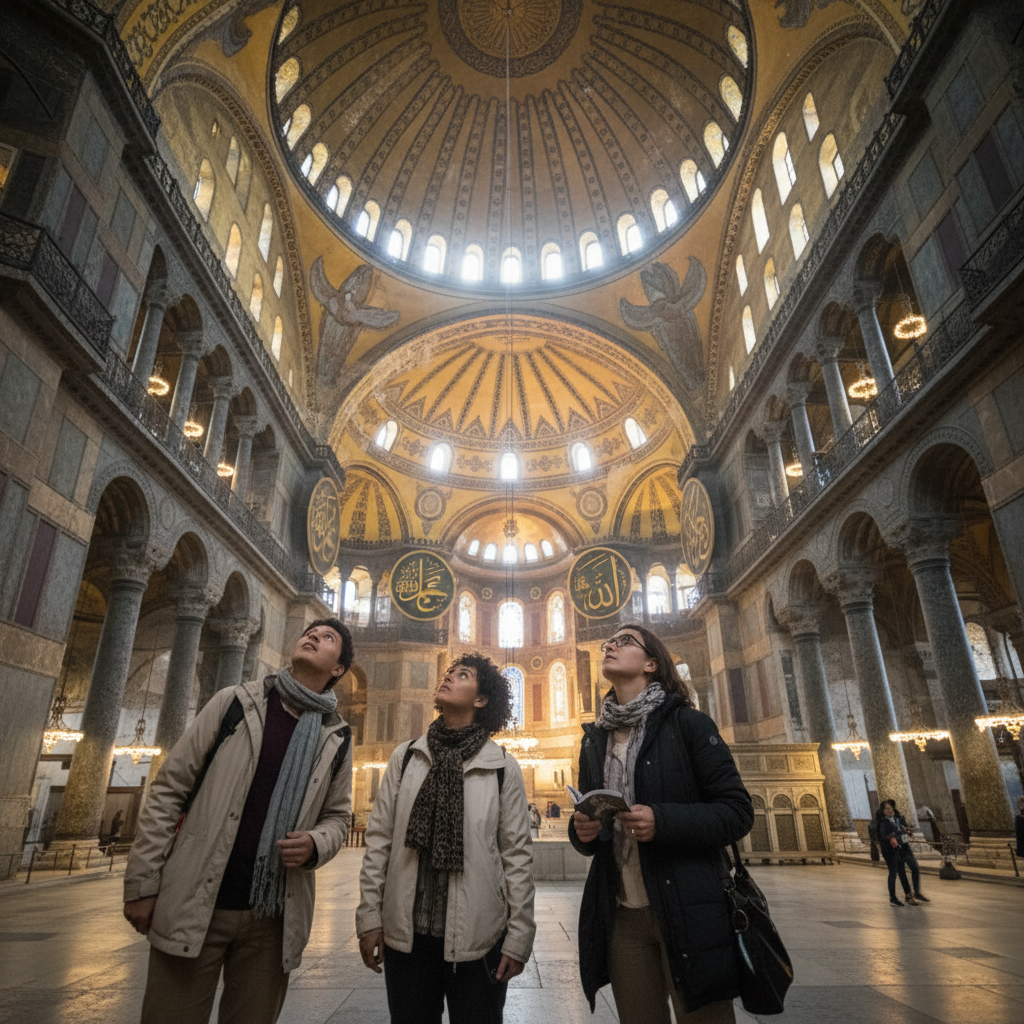
The main prayer area is breathtaking with its massive dome and columns rising from floor to ceiling. The light filtering through the high windows creates a mystical atmosphere inside. The mosaics from the Byzantine period, especially the figures of Mary and Child Jesus, and the portraits of emperors and empresses, are invaluable works for art historians.
- Deesis Mosaic: One of Hagia Sophia's most famous mosaics, depicting Jesus, Mary, and John.
- Komnenos Mosaic: Shows Emperor John II Komnenos and Empress Irene making a donation to Mary and Child Jesus.
- Zoe and Constantine Mosaic: Depicts Empress Zoe and her husband Constantine IX.
The Wishing Column and Other Legends
There are many legendary spots inside Hagia Sophia. One of these is the column known as the "Wishing Column" or "Sweating Column." It is believed that if you insert your thumb into the hole on this column and turn it clockwise while making a wish, it will come true.
The galleries on the upper floor offer a different perspective on the building's architecture. From these galleries, you can get a bird's-eye view of the entire main prayer area and the mosaics. This was also where the nuns and the imperial family followed the prayers.
Practical Information and Hagia Sophia Tourist Guide Tips for Visiting Hagia Sophia
If you are planning to visit Hagia Sophia, you will need some practical information to make your experience more enjoyable. A good
Visiting Hours and Entrance Fee
Since Hagia Sophia is open for worship, it can be visited within certain rules. Visiting hours and entry procedures may change from time to time. It is important to get up-to-date information from the official website or a reliable
During your visit, keep in mind that there may be crowds during special prayer times such as Friday prayer. You can have a calmer visit experience outside these hours.
Dress Code and Etiquette
As Hagia Sophia is a place of worship, it must be visited with appropriate clothing. Women are expected to wear a headscarf to cover their hair and shoulders, and both men and women should wear clothes that cover their knees or are longer. Although headscarves can be provided at the entrance, it is recommended to bring your own.
- One should be respectfully silent inside and avoid speaking loudly.
- Photography is generally allowed, but avoid using flash and disturbing worshippers.
- You must take off your shoes at the entrance.
Best Time to Visit and Tips
The best time to visit Hagia Sophia is in the early morning or close to closing time in the evening. At these times, the crowds are smaller, and you can experience the atmosphere of the building more serenely. Especially in the summer months, it would be wise to choose these hours to avoid the hot weather and crowds.
Additionally, renting an audio guide or touring with a licensed
Nearby Attractions and Area Exploration
When you visit Hagia Sophia, you will also have the opportunity to explore other historical and tourist sites in its vicinity. Sultanahmet Square is located right next to Hagia Sophia and is one of Istanbul's most important historical centers.
Blue Mosque (Sultan Ahmed Mosque)
Located opposite Hagia Sophia, the Blue Mosque is another symbol of Istanbul with its six minarets and unique blue tiles. The juxtaposition of these two magnificent structures offers a captivating synthesis of history and architecture. Visiting both structures on the same day is an indispensable experience for visitors.
Basilica Cistern and Topkapi Palace
The Basilica Cistern, within walking distance of Sultanahmet Square, is a massive underground water reservoir from the Byzantine period. It mesmerizes visitors with its Medusa heads and mystical atmosphere. Topkapi Palace, on the other hand, served as the administrative center of the Ottoman Empire for centuries and awaits visitors with its rich collections and magnificent gardens.
These surrounding structures will complete your
The Future and Legacy of Hagia Sophia
Hagia Sophia is a structure talked about not only for its past but also for its future. Included in the United Nations Educational, Scientific and Cultural Organization (UNESCO) World Heritage List, Hagia Sophia is considered an important cultural heritage for all humanity.
The preservation of the structure and its transmission to future generations is of great international importance. The natural wear and tear and damage caused by human activity to Hagia Sophia necessitate regular restoration and maintenance work. These efforts are vital to convey the unique beauty and historical value of Hagia Sophia to future generations.
Visiting this magnificent structure as a