Hagia Sophia: A Monument of Political and Social Transformations Throughout the Ages (2026)
Hagia Sophia, a monumental structure in Istanbul, stands as a testament to centuries of political and social transformations. This unique example of humanity's common heritage continues to captivate visitors in 2026 with its architectural genius and profound historical meanings. Delve into its evolving identity and lasting impact.
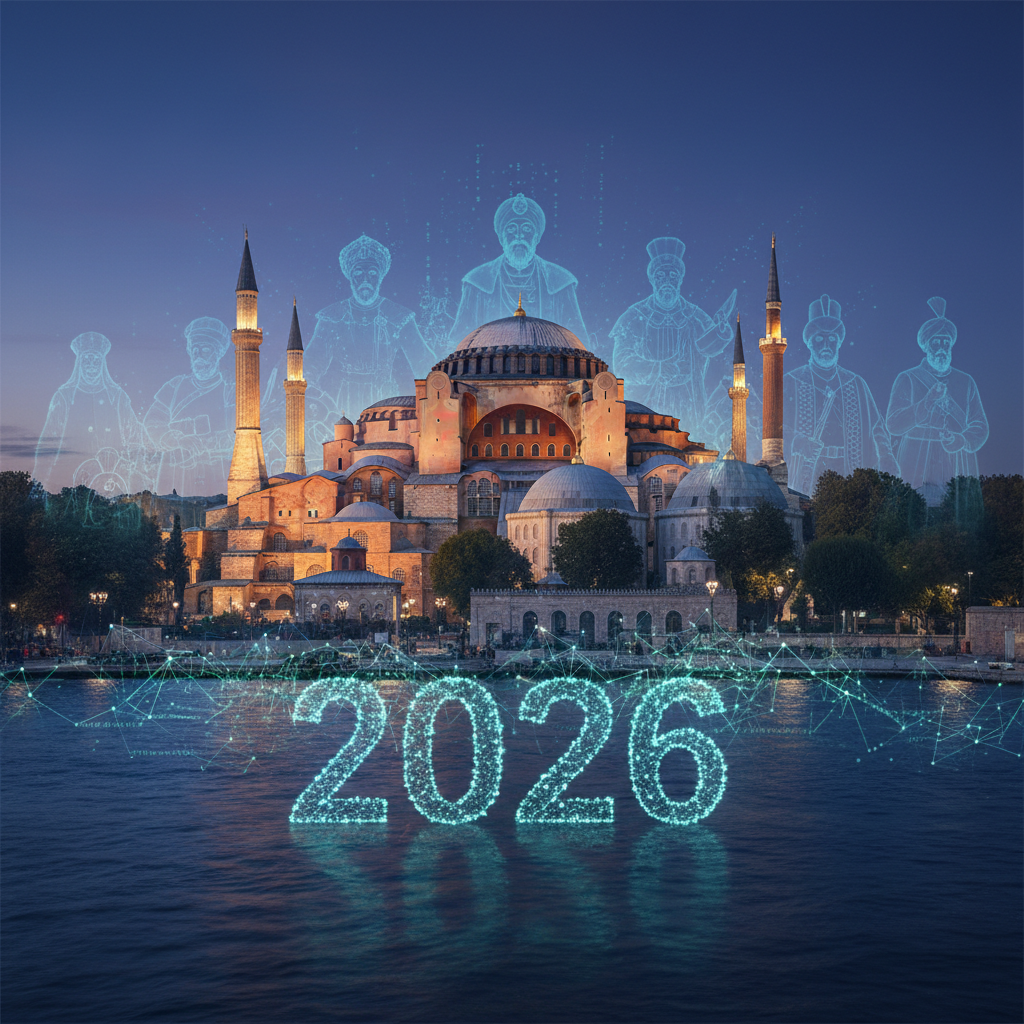
Hagia Sophia: A Monument of Political and Social Transformations Throughout the Ages (2026)
Standing for centuries in the heart of Istanbul and one of the most important structures in world history, Hagia Sophia is a unique example of humanity's common heritage. This immense structure captivates its visitors with both its architectural genius and the profound historical and cultural meanings it carries. Even in 2026, Hagia Sophia maintains its splendor; it is more than just a place of worship or a museum, it is a living witness to the intersection of past and present, and of political and social transformations.
Curious about what 2026 holds for visitors? Dive into the Hagia Sophia Visitor Experiences: Bridging the Past in 2026.
Hagia Sophia's Unique Historical Journey
The origins of Hagia Sophia date back to the 6th century A.D., to the era of Byzantine Emperor Justinian I. During this period, after the destruction of two previous churches located in the area of the Patriarchate, a decision was made to build a more magnificent structure. This church was designed as the largest monumental structure of Orthodox Christianity. Designed by the most brilliant architects of the time, Anthemius of Tralles and Isidore of Miletus, the structure was completed in a short time.
From the day it opened, the structure became the most important center of the Christian world, hosting imperial ceremonies and the liturgies of Patriarchs. With Sultan Mehmed the Conqueror's conquest of Istanbul in 1453, a new chapter opened in the history of Hagia Sophia. Sultan Mehmed the Conqueror converted the structure into a mosque, thereby making it part of Islamic civilization. This transformation led to the structure gaining a new identity both physically and symbolically.
Splendor of the Byzantine Era
- Laying the Foundations (532-537): Construction of Hagia Sophia began during the reign of Emperor Justinian I, designed with the superior engineering knowledge of architects Anthemius and Isidore.
- Center of the Patriarchate: For centuries, it served as the largest church of Orthodox Christianity and the center of the Patriarch of Constantinople.
- Artistic and Architectural Wonder: With its mosaics in the interior decorations, its massive dome, and its engineering marvel of a structure, it was one of the most important buildings of its time.
Ottoman Heritage and A New Identity
After the conquest, Hagia Sophia became part of Ottoman architecture with the addition of minarets, a madrasah, a library, and an imaret. These additions changed the function of the structure, while also allowing it to continue its existence in a new cultural context. While Christian motifs in the structure were preserved, elements of Islamic art were also added in great harmony. For example, additions like the mihrab, minbar, and sultan's lodge transformed the structure into a mosque. To delve deeper into its aesthetic transformations, see Hagia Sophia's Mysterious Weaving: Carpets, Curtain Secrets, and Redeveloped Stories of 2026.
Mystical Stories and Hidden Details in Hagia Sophia
Hagia Sophia attracts attention not only with its historical and architectural beauties but also with the mystical stories and hidden details woven around it. Visitors can immerse themselves deeper into the mysterious atmosphere of the structure while listening to these stories. For example, the "Wishing Column," known for its belief that wishes come true by rotating one's thumb in its hollow, attracts intense interest from visitors. These and similar legends are an important part of the cultural fabric of the structure.
Read about the Hagia Sophia's Mysterious Guardians: Cats, Protective Spirits, and the New Legends of 2026 for more on its enigmatic lore.
The Wishing Column and Other Legends
The "Weeping Column" or "Wishing Column" located within the structure is one of the mystical points that attracts great interest from visitors. It is believed that this column sweats, and that wishes come true for those who insert their finger into its hollow and rotate it a full circle. Additionally, various legends are told about whispering walls or healing water springs in some corners of the structure. These legends transform Hagia Sophia from an ordinary building into an almost living legend.
Another interesting detail is that the location of the mihrab inside the structure, where Sultan Mehmed the Conqueror is believed to have prayed, is almost identical to the location of the main altar during the Byzantine period. This situation represents a mystical point where places of worship of different religions intersect.
Architectural Details and Construction Miracle
There are many reasons why Hagia Sophia is considered an engineering and architectural marvel. One of its most striking features is its colossal dome. This dome was the largest dome of its time and presented great technological challenges when it was built. Lightweight materials were used for the construction of the dome, and it was supported by semi-domes to ensure its stability. These techniques were quite advanced for the 6th century.
Unique Dome Structure
The dome of Hagia Sophia is 55.6 meters high and 31.87 meters in diameter. This massive dome is surrounded by exactly 40 windows, which allow plenty of natural light to enter, giving the interior of the structure a light and airy atmosphere. The absence of any columns supporting the dome is an achievement that pushed the boundaries of engineering knowledge of the time. Although buttresses had to be added to the exterior during the Ottoman period due to cracks in the dome, the original design still stands. You can learn more about its construction marvels at UNESCO's official statement on Hagia Sophia.
Mosaics and Frescoes
The interior decorations of the building underwent many changes over the centuries. The mosaics made during the Byzantine period depict important figures and scenes from Christian history. After the conquest, these mosaics were plastered over, but they were restored and brought to light again in the modern era. These mosaics present some of the finest examples of Early and Middle Byzantine art. Mosaics depicting Emperor Constantine and the Virgin Mary, in particular, are quite striking.
Current Status of Hagia Sophia and Visitor Experience (2026)
With its conversion from a museum back to a mosque in 2020, the visitor experience of Hagia Sophia has also undergone some changes. The structure is now open for worship, and visitors can explore the interior outside of prayer times and by observing appropriate dress codes. This transformation has enabled the structure to embody both its religious and tourist identities simultaneously.
As of 2026, there is some important information for tourists wishing to visit Hagia Sophia. Entry is free, but one must be mindful of prayer times and dress appropriately. It is important for women to cover their heads, and for men to avoid open clothing such as knee-length shorts. Although some of the mosaics inside are covered with curtains, a large portion of the mosaics on the upper floors (gallery level) can still be seen.
For more insights into current best practices for visits, consult travel resources such as TripAdvisor's Hagia Sophia reviews.
Things to Know Before Visiting
- Admission Fee: As of 2026, entry to Hagia Sophia is free.
- Dress Code: Appropriate attire is mandatory for both men and women. Women are requested to wear head coverings. Scarves can be provided at the entrance if clothing is inadequate.
- Prayer Times: Areas designated for worship cannot be entered during prayer times. You should plan your visits outside these hours.
- Best Time to Visit: Avoiding crowded seasons (summer months) and midday offers a calmer experience. Early morning or late afternoon visits are recommended.
- Guided Tours: Visiting with a local guide is very beneficial for best understanding the history and details of the structure.
Hagia Sophia: A Mirror of Political and Social Transformations
Hagia Sophia has continuously been at the center of political and social transformations throughout history. Its conversion from an imperial church to an Ottoman mosque, then a museum, and finally back to a mosque, clearly demonstrates the effect of different civilizations and ideologies on this structure. These transformations prove that Hagia Sophia is more than just a building; it is a living monument that offers profound lessons about human history, the conflict and convergence of civilizations. Continuing to occupy the world's agenda even in 2026, Hagia Sophia reminds us of the importance of cultural heritage and interfaith tolerance. For reflections on global cultural heritage, an additional read can be found at UNESCO World Heritage Centre.